
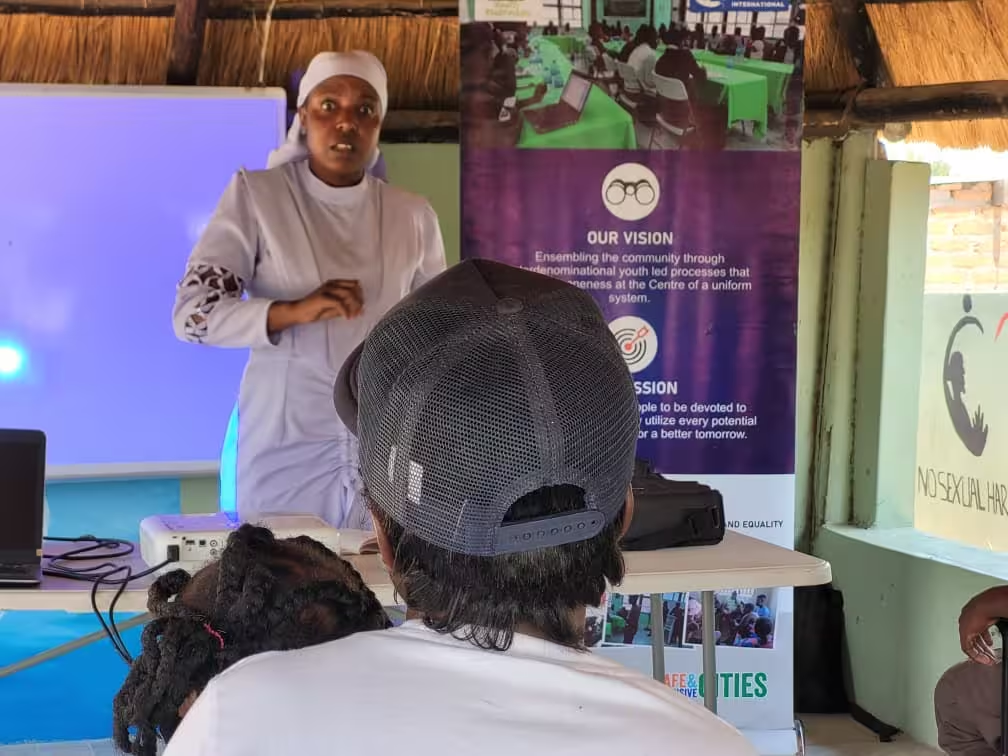
Peri-urban communities sit at the intersection of rural and urban life. While these areas are often close to cities, young people living there face deep and persistent challenges that limit their ability to thrive. Limited access to education, employment, health services, and economic opportunities continues to marginalize peri-urban youth, leaving many trapped in cycles of poverty and exclusion.
Yet within these same communities lies immense potential. With the right support, skills, and opportunities, peri-urban youth can become drivers of economic growth, social cohesion, and sustainable development. Empowering young people is not simply a social good; it is a necessary investment in the future.
Understanding the Realities of Peri-Urban Youth
Peri-urban youth often experience a unique form of exclusion. While cities may appear close, opportunities remain out of reach due to cost, lack of networks, and limited information. Many young people rely on informal work, small-scale trading, or survival activities that offer little stability or growth.
Unemployment and underemployment are widespread, particularly among young women. Early marriage, gender-based violence, and limited access to sexual and reproductive health information further compound vulnerability. Climate-related shocks, such as flooding or food insecurity, add another layer of risk, especially for households already struggling to meet basic needs.
Despite these challenges, peri-urban youth demonstrate resilience, creativity, and a strong desire to improve their circumstances. What they often lack is access to structured support systems that recognize their potential and invest in their growth.
Why Youth Empowerment Matters
Empowering young people means more than providing short-term assistance. It involves building skills, confidence, and agency so that youth can shape their own futures. When young people are empowered, they are better equipped to make informed decisions, pursue livelihoods, and contribute positively to their communities.
Youth empowerment also strengthens social cohesion. Young people who feel included and valued are more likely to engage in community leadership, advocate for their rights, and support collective solutions to shared challenges. This creates communities that are more resilient, inclusive, and forward-looking.
From an economic perspective, investing in youth unlocks productivity and innovation. Youth-led enterprises, climate-smart initiatives, and community-based solutions can drive local development when given the right foundation.
Skills Development as a Pathway to Opportunity
One of the most effective ways to empower peri-urban youth is through practical skills development. Many young people leave school without marketable skills that align with available opportunities. Bridging this gap is essential.
Vocational and technical training equips youth with hands-on skills that can lead directly to income generation. Training in areas such as retail management, agribusiness, renewable energy, and climate-smart agriculture provides pathways to self-employment and small business growth.
Equally important are soft skills such as financial literacy, customer care, leadership, and problem-solving. These skills enhance employability and help young people manage enterprises more effectively. When skills training is combined with mentorship and ongoing support, youth are more likely to sustain and grow their livelihoods.
Economic Empowerment and Access to Finance
Access to finance remains a major barrier for peri-urban youth. Many lack collateral, credit histories, or formal employment records, making traditional loans inaccessible. As a result, promising business ideas often never move beyond the concept stage.
Youth-focused economic empowerment initiatives address this gap by providing alternative financing mechanisms such as revolving funds, savings groups, and small start-up capital. When paired with business training and mentorship, access to finance enables young people to start and expand income-generating activities.
Economic empowerment goes beyond income. It restores dignity, builds independence, and reduces vulnerability to exploitation. For young women, financial independence can be transformative, enabling greater decision-making power within households and communities.
Health, Well-Being, and Safe Spaces
Empowerment cannot be achieved without addressing health and well-being. Sexual and reproductive health and rights play a critical role in shaping young people’s life outcomes. Lack of accurate information, stigma, and limited access to youth-friendly services expose peri-urban youth to health risks that undermine their ability to pursue opportunities.
Creating safe spaces for dialogue, education, and support allows young people to access reliable information and make informed choices. Addressing issues such as gender-based violence, substance abuse, and mental health strengthens resilience and protects the well-being of young people.
When youth feel safe, informed, and supported, they are better positioned to engage in education, work, and community leadership.
Youth-Led Climate Action and Sustainable Livelihoods
Climate change disproportionately affects peri-urban communities, where infrastructure is often weak and livelihoods are fragile. Youth empowerment must therefore include climate resilience and environmental sustainability.
Youth-led climate action initiatives provide training in green skills such as recycling, renewable energy, urban agriculture, and climate-smart farming. These initiatives not only protect the environment but also create new economic opportunities.
By positioning youth as climate leaders, communities benefit from innovative solutions that address environmental challenges while generating income. This approach ensures that development is both sustainable and inclusive.
Leadership Development and Collective Youth Agency
Empowering peri-urban youth requires nurturing leadership and collective action. Individual success is important, but lasting change occurs when young people organize, advocate, and lead together.
Leadership development programs build confidence, communication skills, and civic awareness. They enable youth to participate meaningfully in community decision-making and policy processes. Platforms for dialogue and engagement ensure that youth voices are heard and respected.
Collective youth agency strengthens accountability and promotes inclusive governance. When young people are organized and informed, they can influence policies and practices that affect their lives.
Partnerships That Expand Impact
No single organization can address the complex challenges facing peri-urban youth alone. Strong partnerships with government institutions, development organizations, local authorities, and the private sector are essential.
Collaborative approaches expand access to resources, expertise, and opportunities. Partnerships also ensure that youth empowerment initiatives are aligned with broader development goals and local priorities.
By working together, stakeholders can create enabling environments where youth-led solutions are supported and scaled.
Turning Challenges into Opportunities
The challenges facing peri-urban youth are real and deeply rooted, but they are not insurmountable. With intentional investment in skills, economic empowerment, health, climate action, and leadership, these challenges can be transformed into opportunities for growth and innovation.
Empowering peri-urban youth is not an act of charity. It is a strategic choice that strengthens communities, drives sustainable development, and builds a more inclusive society. When young people are trusted, supported, and empowered, they do not merely survive. They lead, create, and shape a better future for themselves and the generations that follow.